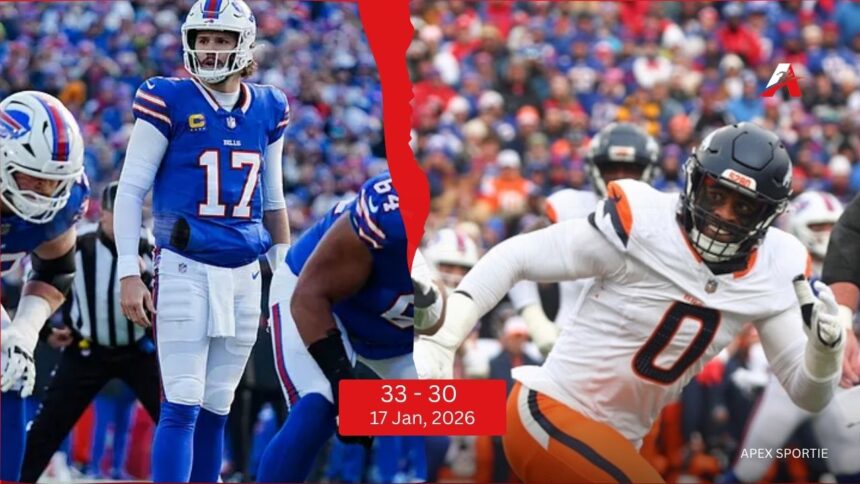
The buffalo bills vs denver broncos match player stats became one of the most talked-about topics after an unforgettable AFC Divisional Round playoff clash on 17 January 2026. Denver secured a dramatic 33-30 overtime victory at Empower Field at Mile High, advancing to the AFC Championship Game after one of the most competitive postseason contests of the year. The matchup featured elite quarterback play, explosive offensive drives, clutch special teams, and several game-changing defensive turnovers that completely shifted momentum.
Both teams entered the playoffs with championship ambitions, and the contest lived up to expectations from kickoff until the final overtime field goal. Buffalo mounted an impressive comeback after trailing during the second half, while Denver responded with late-game composure and a resilient defense. This statistical breakdown explores every important performance, including quarterback production, offensive leaders, defensive impact, scoring drives, and the numbers that ultimately decided the outcome.
Final Score and Match Summary
The game remained highly competitive throughout four quarters before extending into overtime. Buffalo erased a double-digit deficit and forced extra time with a clutch 50-yard Matt Prater field goal as regulation expired. However, Denver’s defense produced the decisive turnover in overtime, setting up Wil Lutz for the game-winning kick.
Quarter-by-Quarter Score
| Team | Q1 | Q2 | Q3 | Q4 | OT | Total |
|---|---|---|---|---|---|---|
| Buffalo Bills | 7 | 3 | 7 | 13 | 0 | 30 |
| Denver Broncos | 3 | 17 | 3 | 7 | 3 | 33 |
Match Summary
| Category | Buffalo Bills | Denver Broncos |
|---|---|---|
| Final Result | Lost | Won |
| Overtime | Yes | Yes |
| Game-Winning Score | — | Wil Lutz 23-yard FG |
| Biggest Lead | 4 | 13 |
Buffalo Bills Offensive Statistics
Josh Allen once again carried Buffalo’s offense through his passing ability and aggressive running style. Despite producing several impressive scoring drives, turnovers became the deciding factor, preventing the Bills from completing another remarkable postseason comeback. Buffalo consistently moved the football but struggled to protect possession during critical situations, especially in overtime.
Buffalo Offensive Team Stats
| Category | Bills |
|---|---|
| Points | 30 |
| Passing TDs | 3 |
| Rushing TDs | 0 |
| Field Goals | 3 |
| Turnovers | 5 |
| Fourth Quarter Points | 13 |
Buffalo Scoring Plays
| Quarter | Player | Play |
|---|---|---|
| Q1 | Mecole Hardman | 4-yard TD Reception |
| Q2 | Matt Prater | 33-yard Field Goal |
| Q3 | Keon Coleman | 10-yard TD Reception |
| Q4 | Dalton Kincaid | 14-yard TD Reception |
| Q4 | Matt Prater | 31-yard Field Goal |
| Q4 | Matt Prater | 50-yard Field Goal |
Denver Broncos Offensive Statistics
Denver’s offense displayed patience and efficiency throughout the afternoon. Rookie quarterback Bo Nix delivered several clutch throws while spreading the football effectively across multiple receiving targets. The Broncos also benefited from excellent field position generated by their defense, allowing them to convert turnovers into valuable points during the second quarter and overtime.
Denver Offensive Team Stats
| Category | Broncos |
|---|---|
| Points | 33 |
| Passing TDs | 3 |
| Field Goals | 4 |
| Overtime Points | 3 |
| Takeaways Created | 5 |
Denver Scoring Plays
| Quarter | Player | Play |
|---|---|---|
| Q1 | Wil Lutz | 28-yard Field Goal |
| Q2 | Frank Crum | 7-yard TD Reception |
| Q2 | Lil’Jordan Humphrey | 29-yard TD Reception |
| Q2 | Wil Lutz | 50-yard Field Goal |
| Q3 | Wil Lutz | 33-yard Field Goal |
| Q4 | Marvin Mims | 26-yard TD Reception |
| OT | Wil Lutz | 23-yard Game-Winning Field Goal |
Buffalo Bills Defensive Statistics
Buffalo’s defense created pressure at several stages but struggled to finish crucial possessions against Denver’s balanced offense. The Bills registered multiple tackles for loss and forced one turnover, yet the Broncos consistently converted key third downs and controlled field position during the second half. The overtime takeaway battle ultimately favored Denver, preventing Buffalo from completing another postseason comeback.
Denver Broncos Defensive Statistics
Denver’s defense produced the biggest plays of the afternoon by consistently forcing Buffalo into costly mistakes. The Broncos finished with five takeaways, including multiple interceptions that changed momentum during regulation and overtime. Their defensive unit also limited Buffalo’s explosive plays despite allowing over 400 total yards, proving that timely turnovers can outweigh total yardage in playoff football.
Quarterback Performance Comparison
Josh Allen and Bo Nix delivered one of the most entertaining quarterback duels of the postseason. Allen generated more total offensive yards while extending plays with his mobility, whereas Nix relied on efficient passing and smart decision-making. Although Buffalo gained more total yards, Denver’s quarterback protected possession more effectively and guided the game-winning overtime drive before exiting with an ankle injury.
Quarterback Comparison
| Statistics | Josh Allen (BUF) | Bo Nix (DEN) |
|---|---|---|
| Passing Yards | 266 | 279 |
| Passing TDs | 3 | 3 |
| Interceptions | 2 | 1 |
| Completion % | 64.1% | 56.5% |
| Pass Attempts | 39 | 46 |
| Sacks Taken | 3 | 0 |
| Result | Loss | Win |
Rushing Leaders
Buffalo dominated the ground game by finishing with 183 rushing yards, significantly outperforming Denver’s rushing attack. Josh Allen and the Bills’ running backs consistently moved the chains, helping Buffalo control possession for long stretches. Denver, however, balanced its offense with efficient passing, making up for a relatively quiet performance on the ground.
Complete Team Statistics
The final team statistics reveal just how competitive this playoff battle was. Buffalo finished with 449 total yards, compared to 349 for Denver, and also dominated the rushing category. However, Denver’s advantage in turnovers proved decisive, demonstrating that protecting the football often matters more than winning the yardage battle in postseason games.
Complete Team Comparison
| Team Statistics | Buffalo Bills | Denver Broncos |
|---|---|---|
| Total Yards | 449 | 349 |
| Passing Yards | 266 | 279 |
| Rushing Yards | 183 | 70 |
| First Downs | 28 | 22 |
| Third Downs | 10/15 | 8/16 |
| Total Plays | 78 | 68 |
| Turnovers | 5 | 1 |
| Penalties | 5-68 | 3-20 |
| Time of Possession | Slight Edge | — |
| Final Result | Lost | Won |
Drive-by-Drive Scoring Summary
Both teams produced multiple scoring drives that kept the AFC Divisional Round matchup competitive until the final seconds of overtime. Denver dominated the second quarter with consecutive touchdown drives, while Buffalo answered in the second half by scoring on several crucial possessions to erase a double-digit deficit. The Broncos eventually capitalized on a turnover during overtime before Wil Lutz converted the game-winning field goal.
Quarter-by-Quarter Breakdown
The first quarter belonged to Buffalo as the Bills established an early lead through efficient offensive execution. Denver responded with its strongest football during the second quarter by scoring seventeen unanswered points, shifting momentum before halftime. Buffalo refused to surrender, gradually reducing the deficit with disciplined offensive drives and forcing overtime through a clutch field goal as regulation expired.
Key Match Highlights
The game featured several memorable moments that influenced the final outcome. Denver’s defense forced five critical turnovers, creating valuable scoring opportunities throughout regulation and overtime. Rookie quarterback Bo Nix displayed remarkable composure under postseason pressure, while Josh Allen nearly completed another signature comeback despite facing constant defensive pressure from the Broncos.
Key Takeaways
The statistical comparison clearly illustrates why Denver emerged victorious despite Buffalo finishing with more offensive yards. Winning the turnover battle, capitalizing on short-field opportunities, and executing efficiently during overtime proved more valuable than total yardage. Denver’s balanced performance under pressure demonstrated championship-level composure during one of the NFL’s biggest playoff stages.
Buffalo displayed tremendous resilience by overcoming a double-digit deficit and forcing overtime, but five costly turnovers overshadowed an otherwise productive offensive performance. The Bills moved the football effectively throughout the game, yet protecting possession became the defining difference between advancing to the AFC Championship Game and ending their postseason journey.
Conclusion
The buffalo bills vs denver broncos match player stats reflected one of the most entertaining NFL playoff contests of the 2026 postseason. Denver’s 33-30 overtime victory showcased elite quarterback play, timely defensive takeaways, and outstanding special teams execution. Buffalo produced more total offensive yards and mounted an impressive comeback, but turnovers ultimately prevented the Bills from completing another memorable postseason win.
From Bo Nix’s efficient passing to Josh Allen’s offensive leadership and Wil Lutz’s decisive overtime field goal, this AFC Divisional Round matchup delivered outstanding performances across every phase of the game. The verified statistics demonstrate how execution in critical moments often determines postseason success, making this overtime thriller one of the standout games of the 2026 NFL Playoffs.
More Update APEX SPORTIE